Header graphic for print

New York Injury Cases Blog

News & Updates on Pain & Suffering Verdicts & Settlements

Federal Appeals Court Affirms $15,000,000 Pain and Suffering Verdict in Paralysis Case

Posted in Paralysis

On January 17, 1999,  Vito Saladino, then 36 years old, was working for American Airlines as a baggage handler at John F. Kennedy International Airport in Queens. Mr. Saladino was a passenger in a baggage tractor driven by a co-worker and as they passed a parked jet, backwash from the jet’s engine caused the baggage tractor’s hood to lift up and strike Mr. Saladino’s head. The impact fractured his cervical spine and rendered hm a quadriplegic.

The Baggage Tractor in this Case


A lawsuit was commenced in 2001 in the United States District Court in Brooklyn (usually such a case would be brought in state court but because the parties were citizens of different states, so-called diversity jurisdiction under 28 U.S. Code Section 1332 allowed plaintiff to choose federal court instead).

Trial in November 2008 resulted in a jury finding that two parties caused the accident – the manufacturer of the baggage tractor,  Stewart & Stevenson Services, Inc. and its related companies (30%) and the owner of the vehicle, American Airlines (70%).

The tractor should have been equipped with a cab and latches that might have prevented the injury from the fly-away hood. The defendants were therefore liable on a failure to warn theory- users operating the vehicle without a cab and without adequate latches did not know the hood could swing back, enter the passenger compartment and strike an occupant.

A separate trial on damages was held in July 2010 and plaintiff was awarded pain and suffering damages in the sum of $15,000,000 ($5,000,000 past – nine years, $10,000,000 future – 24 years).  The trial judge issued a  decision denying the defendants’ motion for a new trial on the grounds of excessiveness.

The defendants then appealed both the liability and damages verdicts; however, in  Saladino v. American Airlines, Inc. (2d Cir. 2012),  the federal appellate court has now affirmed  the  entire verdict.

Here are some details of the tragic nature of plaintiff’s injuries and losses:

  • multiple cervical spine fractures
  • numerous surgeries including corpectomies (removal of vertebral bone and disc material) at C-4 and C-5  and spinal fusion
  • about a year and a half as an inpatient in hospitals and rehabilitation facilities
  • feeling only above collar bone and at top of shoulders
  • cannot open or close fingers and operates electric wheelchair by leaning on a joystick
  • requires 24 hour a day home care with nurses and health care aides
  • incontinence: requires constant catheterization for bladder evacuation and nurse to manually clear bowels

Cervical Corpectomy and Fusion

The defendants did not challenge the nature and severity of plaintiff’s injuries; they merely claimed that the verdict amounts were much too high. In comparing the awards in this case with awards approved by appellate courts in other similar cases, the defense pointed to the fact that Mr. Saladino experiences little physical pain on a daily basis. In those cases in which as much as $10,000,000 has been approved by New York appeals courts for pain and suffering, the defense correctly noted that the plaintiffs experienced excruciating pain on an ongoing, chronic basis.

The appellate judges in Mr. Saladino’s case dismissed the “no pain” argument approving the trial judge’s decision which noted that in the cases cited by the defendants the paralysis was less (paraplegia versus quadriplegia) and that in this case Mr. Saladino has complete understanding of his “near-total loss of physical limitations” and the fact that he “is essentially a prisoner in his own body, dependent on others for every moment of his day.”

In connection with their excessiveness claim, the defendants argued that the the federal appellate court was limited in its review of comparable cases to those cases decided by New York’s Appellate Division  Second Department (to which an appeal would have been taken had this case been brought in the state court). That argument was made because it’s widely thought that the Second Department (hearing appeals from 10 downstate counties such as Kings, Queens, Nassau, Suffolk and Westchester) is less likely than the First Department (which hears appeals from the Bronx and Manhattan) to allow higher verdicts to stand and more likely to order a reduction. The judges in Saladino rejected this defense argument noting that there is “no binding authority for this proposition” and that “it would be odd for a federal court to disregard potential informative cases arising in other parts of the state.”

Inside Information:

  • In closing arguments, plaintiff’s’ attorney asked the jury to award pain and suffering damages in the sum of $40,000,000 whereas one of the defendants’ attorneys suggested $5,000,000 and the other suggested $2,500,000.
  • The verdict also included (a) past medical expenses in the sum of $4,908,108 (to which all counsel stipulated) and future medical expenses in the sum of $18,000,000 (over 24 years) and (b) past and future loss of earnings in the sum of $1,532,309.
  • Mrs. Saladino presented a loss of consortium claim. Although separated and living apart since 2008 when Mr. Saladino moved out of the marital home, Mrs. Saladino had left work for two years immediately after the accident to care for her husband, intimate physical relations were non-existent and the marriage was destroyed by the accident. The jury awarded her $750,000 (after her attorney asked for $1,000,000 with defense counsel suggesting $500,000).


Large Pain and Suffering Verdict Affirmed for Teenager with Fractured Leg and Degloving Injury

Posted in Ankle Injuries, Leg Injuries

On November 19, 2005, at about 7 p.m., Ernest Lewis, then 13 years old, was on his way home from church walking towards the bus stop at 145th Street and Convent Avenue in Manhattan. He saw a bus ahead and ran along the sidewalk to catch it before the driver pulled away.

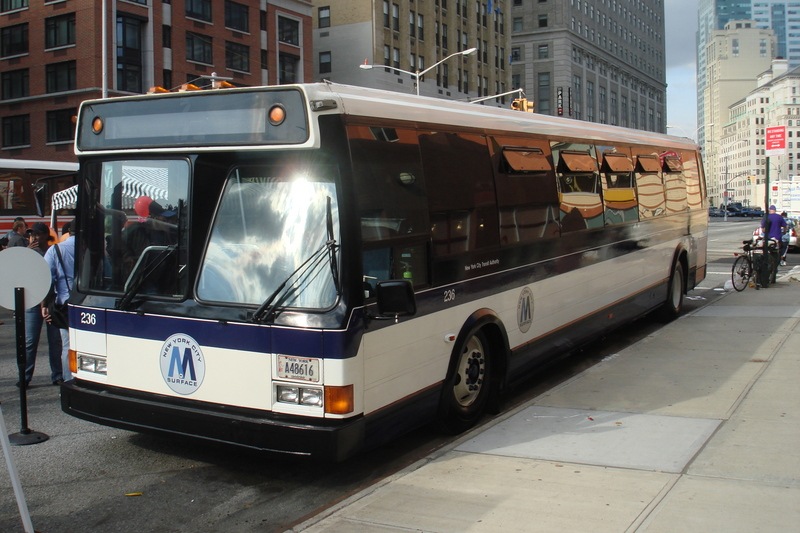
Ernest reached the rear of the 60 foot long stopped bus and tapped the side with his hands to alert the driver but as Ernest was going toward the front to get on the bus, he fell under the wheel near the sidewalk, at the middle of the bus. At the same time, the bus began to pull out of the stop and ran over his legs with the right middle tire.

Ernest sustained very significant leg injuries and a lawsuit was brought on his behalf alleging that the bus driver was negligent because he pulled away from the bus stop when it was unsafe to do so.

The jury heard testimony about where Ernest was when the bus moved out, what the driver saw and heard before moving and on March 3, 2011 they returned a verdict finding the driver 100% at fault.  They then heard testimony about Ernest’s injuries and awarded him pain and suffering damages in the sum of $6,500,000 ($2,500,000 past – five years, $4,000,000 future – 10 years).

In Lewis v. New York City Transit Authority (1st Dept. 2012) both the liability and damages verdict have been affirmed on appeal.

The decision sets forth that plaintiff sustained an open fracture of  his distal fibula and a degloving injury of his  ankle and lower leg (the traumatic tearing away of tissue and muscle) resulting in extensive hospitalization, surgeries, arthritic changes and a need for future ankle fusion. Here are the details of plaintiff’s treatment:

  • open reduction and internal fixation surgery (with screw and rod through the length of the fibula)
  • external fixation applied to right leg for three months
  • placement of syndesmotic screw between tibia and fibula
  • five irrigation and debridement and plastic surgical procedures for highest grade of severity of tissue loss (including an eight hour surgery to transplant abdominal muscle to his calf and a 400 square centimeter skin graft from his thigh)
  • surgery to transplant blood vessels
  • total of eight surgical procedures in the three months post-accident
  • left ankle casted for six weeks for suspected calcaneus fracture
  • hospital in-patient for three and a half weeks, 10 weeks of in-patient physical therapy and 14 months of home care

Plaintiff’s prognosis is poor:

  • substantially limited range of motion in all aspects of his right ankle
  • arthritis presence indicates the need for ankle replacement or fusion surgery in five years
  • permanent scarring on abdomen and leg with dessication (dryer skin caused by lack of any oil producing glands leading to permanent chronic skin cracking and injury susceptibiliy
  • inability to walk without limping by the end of many days
  • embarrassment and depression

Inside Information:

  • Plaintiff’s main treating physicians – an orthopedic surgeon and a plastic surgeon – testified on his behalf; however, while the defense had plaintiff examined before trial by three different physicians, no doctor testified for the defense.
  • The jury’s award of future pain and suffering damages covered a period of only 10 years even though the judge charged the jury that plaintiff’s life expectancy was 57 years and the testimony of plaintiff’s physicians as to permanency was unchallenged. Plaintiff’s counsel surmised that the jurors must have had some knowledge of the workings of New York’s structured settlement law (CPLR 5041) that limits (i.e., structures in the form of an annuity) future pain and suffering payments to a period of 10 years.


Punitive Damages Award Dismissed by New York’s Highest Court in Case against Physician who Sexually Exploited Patient

Posted in Psychological Damages, Punitive Damages

Following incapacitating panic attacks in 2000, Kristin Dupree, then 29 years old, treated with family practitioner James F. Giugliano, M.D. in Southampton, New York over a period of 17 months. The doctor’s “treatment” included a nine month long sexual relationship that his patient later claimed caused her severe emotional distress.

A malpractice lawsuit against the doctor was filed in 2004. Plaintiff testified at trial that she had been unable to control herself and refrain from a sexual relationship with her doctor. She produced expert testimony from a psychiatrist who concluded that plaintiff had experienced eroticized transference – a medical phenomenon in which a patient experiences a near psychotic attraction to her treating physician.

In November 2008 a verdict was rendered in plaintiff’s favor in the sum of $416,000 ($200,000 for mental distress and $134,00 for economic damages, reduced by 25% to $250,000 for plaintiff’s comparative fault) plus $166,000 for punitive damages.

The verdict was affirmed on appeal in 2011 and we discussed the case and the initial appeal here.

Now, New York’s highest court has dismissed the punitive damages award in Dupree v. Giugliano (Court of Appeals 2012).

The court clarified the standard for an award of punitive damages in New York noting  that a defendant must manifest evil or malicious conduct beyond any breach of professional duty. There must be aggravation or outrage, such as spite or malice, or a fraudulent or evil motive on the part of the defendant, or such a conscious and deliberate disregard of the interests of others that the conduct may be called willful or wanton.

In this case, the high court concluded, punitive damages were not available because there was no evidence that the doctor willfully caused plaintiff’s transference or harm.

Inside Information:

  • In arguing that the doctor’s conduct was not aggravated beyond mere negligence, the defense noted that he was having his own domestic problems at home, was “caught up in the moment” and was “obviously smitten by the beauty and charm of the plaintiff and her seductive conduct.”
  • Plaintiff argued that the defendant’s behavior clearly showed his conscious disregard of plaintiff’s interests and was like “tossing a match into a dry forest” because she could have been quickly cured of her panic attacks but instead was sexually exploited and will as a result suffer many years of severe depression.


Teenager’s Catastrophic Arm Injury Verdict Affirmed on Appeal

Posted in Amputation Injuries

On October 2, 2004, Gary Hoover was operating a tractor-driven post hole digger for a fence project in his backyard in upstate Cambria, New York. This is a very dangerous piece of equipment.

Hoover’s 16 year old step-daughter, Jessica, was helping him by  holding the digger’s gear box to line up the auger so a straight hole could be dug. After several holes were dug, Lori’s coat became snagged by a protruding bolt on the unguarded drive shaft of the digger and she was dragged into the driveline; her right arm was traumatically severed above the elbow.

In the ensuing lawsuit, claims were asserted against the product’s designers and manufacturers, distributor,  retail seller and owner.

A one month trial in Niagara County concluded on April 7, 2011 with a jury verdict that the auger was defectively designed.

The jury apportioned liability among the defendants as follows: the designer and manufacturer – 30%, the distributor – 35%, the owner – 30%, the operator – 3% and the retail seller – 2%.

Pain and suffering damages were awarded in the sum of $5,000,000 ($1,000,000 past – 6 1/2 years, $4,000,000 future – 59 years). In Hoover v. New Holland North America, Inc. (4th Dept. 2012), both the liability and damages verdicts have now been affirmed.

Plaintiff argued on appeal that $1,000,000 for past damages was inadequate and should be increased in view of the following injury facts:

  • Jessica was conscious while hanging from the post hole digger’s driveline and saw her right arm lying on the ground; she had to be cut down by her stepfather
  • daily pain and sensitivity in her stump, phantom pain that is excruciating, neck and back pain
  • significant psychic and emotional trauma, including depression
  • fractures of her left clavicle, scapula and humerus

Defendants argued on appeal that the overall $5,000,000 pain and suffering award was excessive because Jessica “enjoyed a reasonable return to everyday activities” including:

  • her return to high school within several months and graduating on time,
  • obtaining a driver’s license and driving a car,
  • being employed for four years after high school at a bank,
  • becoming a mother and raising an infant on her own, and
  • attending a local community college

In affirming the entire pain and suffering award, the appellate court rejected plaintiff’s argument that the past award was inadequate and the defendants’ argument that the entire award was excessive.

The total jury award was $8,811,587. In addition to $5,000,000 for pain and suffering damages, the jury awarded (and the appellate court affirmed) $3,811,587 for economic damages:

  • past medical expenses – $138,653
  • future medical expenses – $2,677,934
  • past loss of earnings – $45,000
  • future loss of earnings – $950,000

The future medical expenses award included $1,687,902 for prosthetic devices, their repair and maintenance. Each prosthetic arm must be replaced every three to five years and they cost $64,000 each.

Inside Information:

  • On the third day of trial, the manufacturers and the owner settled for a total of $4,625,000. Under General Obligations Law Section 15-108, the settlement will reduce the amount plaintiff receives from the overall $8,811,587 verdict.

Appellate Court Affirms Minimal Award to Construction Worker

Posted in Back Injuries, Clavicle Injuries, Rib Injuries

On May 4, 2004, John Mescall, a 42 year old construction worker, was standing on top of a building’s exterior canopy when a crane dropped a 25 by 25 foot steel mesh causing it to fall 20 feet in the air and strike Mescall between his neck and shoulder.

Here is the Ironworkers Building at 37-31 30th Street in Long Island City, where this accident took place:

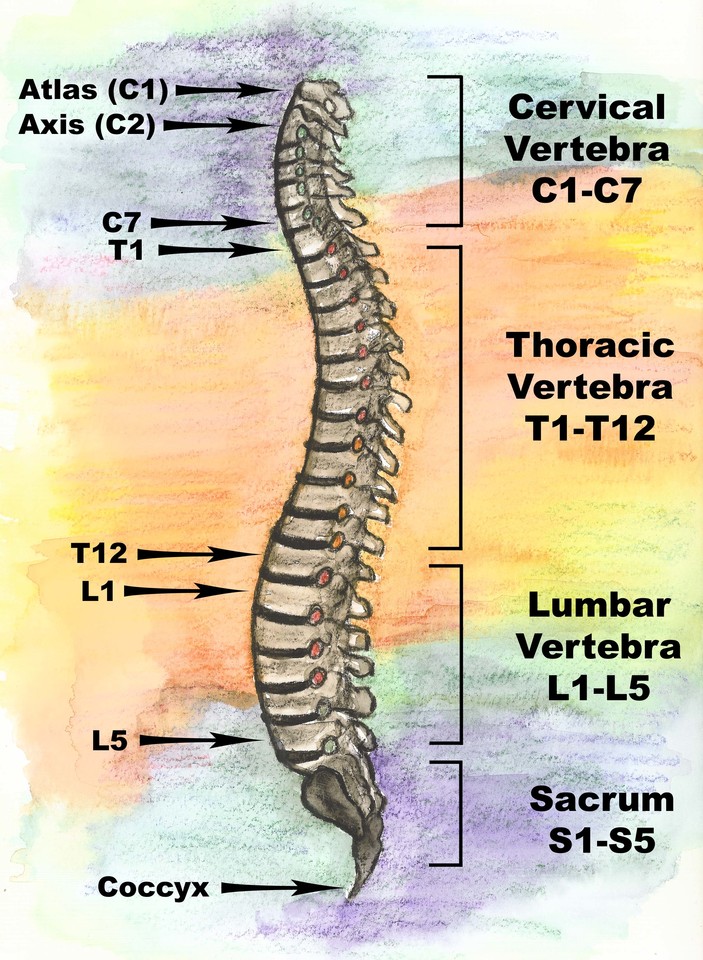
Mescall was taken to the local hospital complaining of of shoulder pain. He was diagnosed with fractures of his left clavicle, T-1 and T-2 transverse processes and first though third ribs on his left side and treated with pain medications and a sling.

A transverse process is a bony protrusion from the back of a vertebrae:

Mescall claimed the accident also caused head, neck, back, ankle and shoulder injuries which required four surgeries (including ankle tendon repair in 2006, shoulder arthroscopies in 2007and cervical fusion surgery at C5-6 in 2009) and left him with unable to return to work.

Ankle tendons attach muscles of the lower leg to the ankle and foot:

In his ensuing lawsuit under Labor Law Section 240, Mescall was granted summary judgment on liability and the matter proceeded to a trial on damages only.

On October 14, 2012, a Manhattan jury awarded plaintiff pain and suffering damages in the sum of $25,000 (past only – 6 1/2 years).

The jury also awarded $124,000 in past medial expenses (an amount the parties had agreed upon), $90,000 in lost earnings and $200,000 in future medical expenses (27 years).

On appeal, plaintiff argued that the pain and suffering award was inadequate and, in view of the fact that the jury awarded $200,000 for his future medical expenses, inconsistent in that he should have been awarded damages for future pain and suffering.

In Mescall v. Structure-Tone, Inc. (1st Dept. 2012), the all of the damages awards were affirmed.

As indicated in the court’s decision, the jury had evidence before it from which it was reasonable to conclude that most of Mescall’s injuries pre-existed this accident and that the others (fractured clavicle, vertebra and ribs) had healed.

The evidence relating to plaintiff’s pre-existing injuries included several accidents and lawsuits in which Mescall made claims of injury and received diagnoses as follows:

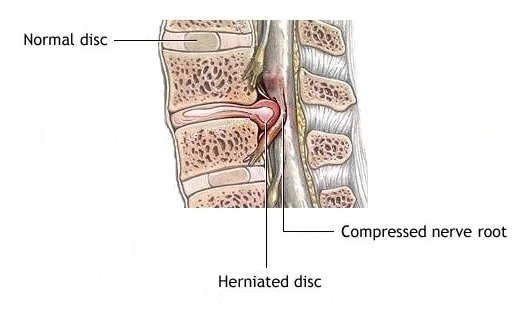
  • 1989 work-related accident resulting in disc herniation at L4-5
  • 1994 trip and fall accident  which he  claimed caused permanent injuries to his neck, back and knee with an ultimate diagnosis of lumbar radiculopathy and a recommendation for epidural steroid injections
  • aerial lift accident on July 4, 2000 in which Mescall was struck on the side of his head and which, according to his doctor’s report just four months before the May 4, 2004 construction accident, left Mescall totally disabled due to permanent head, vision and hearing injuries
  • cervical radiculitis radiating pain to both shoulders for years before and within a few months of the 2004 construction accident with positive tests for rotator cuff injuries and shoulder impingement syndrome

 Inside Information:

  • The jury was shown surveillance videotape of the plaintiff walking along a beach on a hot summer day. The defense claimed that it showed plaintiff walking, bending, lifting and talking on a cell phone without any indication plaintiff was in pain or had any difficulties. Plaintiff’s attorney said that the presentation of the video was a desperate act by which the defense sought a damages discount.
  • Plaintiff’s attorney asked the jurors to award $5,000,000 in pain and suffering damages ($2,000,000 past, $3,000,000 future). He also requested $500,000 in future loss of earnings and $4,700,000 in future medical expenses.

Appeals Court Allows $1,000,000 for Rotator Cuff Injury Pain and Suffering

Posted in Shoulder Injuries

On May 29,2003, Joseph Rubio was about to catch a city bus at 72nd Street and Lexington Avenue in Manhattan on his way to work as a commercial real estate broker. It was a kneeling bus and, as he was boarding, the steps rose without warning causing him to fall forward and hurt his shoulder.

A kneeling bus:

Rubio ended up suing the transit authority alleging that the bus driver caused his fall by improperly raising the kneeling bus while he was still in the stairwell.

The defendant argued that the accident never happened – it was neither reported to the police nor the transit authority and no ambulance was summoned to the scene as plaintiff picked himself up, took another bus to work and did not seek medical attention until later that day when he saw a doctor.

On December 6, 2009, a Manhattan jury found for the plaintiff and ruled that the transit authority was 100% at fault for the accident.

The same jury then awarded pain and suffering damages in the sum of $2,434,615 ($750,000 past – 6.5 years, $1,684,615 future – 14.6 years.

In Rubio v. New York City Transit Authority (1st Dept. 2012), the appellate court has ordered a reduction of the pain and suffering damage award to $1,000,000 ($500,000 past, $500,000 future).

Here are the details of plaintiff’s injuries:

  • Right (dominant) shoulder and arm pain requiring a sling for six weeks
  • Rotator cuff tears (subscapularis and supraspinatus tendons) diagnosed by an MRI four days post-accident
  • Physical therapy for six weeks
  • Arthroscopic surgery (inferior acromioplasty) 10 months post-accident to suture the supraspinatus tendon back in place
  • Immobilizer for six weeks post-surgery
  • Post-operative infection at the surgical site

 Plaintiff’s expert orthopedic surgeon, Jeffrey Kaplan, M.D., testified that because of the infection:

  • the surgical repair broke down and left Mr. Rubio in the same condition that he was in before his surgery, but
  • new surgery, such as a shoulder replacement, was not recommended due to the deleterious effects of the infection.

The expert further opined that Rubio has a permanent 50% range of motion loss in his shoulder and has a painful and debilitating condition that is permanent and will get progressively worse.

Rubio testified that he can move his right arm above his waist only by pushing it up with his left hand, he cannot shower, shave or get dressed without help from his wife, and cannot any longer  hike, bicycle or bowl (activities, among many others, that he previously rigorously pursued as a very active and fit 62 year old).

Inside Information:

  • At trial, there was extensive and acrimonious argument concerning the relevance and admissibility of plaintiff’s medical records from the Mayo Clinic where he’d gone annually for many years before the accident. Defense counsel contended that all of the records, which included a long history of coronary troubles such as open heart surgery and stents, should be before the jury because plaintiff claimed he was in excellent health and very physically active before the accident.
  • There was evidence that plaintiff had a pre-existing right arm biceps tendon tear. His expert, though, testified that it had nothing to do with the torn rotator cuff or shoulder weakness and dysfunction. The defense relied upon cross-examination of plaintiff’s expert and testimony from the radiologist in arguing that the biceps tendon tear was a significant cause of plaintiff’s current injury.


Ankle and Back Injuries Result in $2,219,571 Pain and Suffering Verdict Affirmed on Appeal

Posted in Ankle Injuries, Back Injuries

On June 30, 2006, Manuel Guallpa fell to the ground from a ladder 10 feet high while repairing windows at a storefront construction site in Queens County. His right ankle sustained the brunt of the fall and he was taken to the local hospital where he was diagnosed with an intra-articular fracture of the medial malleolus.

Mr. Guallpa’s ankle was casted for six weeks but the fracture did not heal and open reduction internal fixation surgery was required six months later.

Within months of his surgery, though, he began to regress and a second surgery was required in August, 2008, during which the hardware was removed and scar tissue was cleaned out.

Despite the two ankle surgeries, Guallpa, 23 years old at the time of his accident, ended up with:

  • an antalgic gait
  • intra-articular arthritis
  • inability to return to construction work
  • the need for more surgery – either a total ankle replacement or an ankle fusion

Guallpa claimed that he also sustained a back injury, though he didn’t undergo any treatment for several months and the defendant argued that it was unrelated. Nonetheless, Guallpa claimed he was suffering from back pain that radiated down his leg and he underwent a pain management program including opiate medications and epidural steroid injections.

A year after the accident, an MRI showed a large herniated disc at L4-5 and he underwent a lumbar diskectomy in November 2008.

A left shoulder rotator cuff impingement injury was also claimed but it was treated without surgery and did not appear to be a major part of plaintiff’s case.

Guallpa sued the building’s owner claiming liability under Labor Law Section 240(1) which requires building owners to furnish ladders to construction workers so as to provide the worker with proper protection. In this case, it was alleged that there was no safety device provided and no one securing the ladder.

Summary judgment was granted to Guallpa in 2009 and a damages only trial was held in October 2010

The Queens County jury awarded plaintiff pain and suffering damages in the sum of $2,219,571 ($791,000 past -  4 years, $1,428,571 future – 28 years).

The defendant appealed on the ground that the award was excessive; however in Guallpa v. Key Fat Corp. (2d Dept. 2012), the entire $2,219,571 pain and suffering verdict has been affirmed (as were the additional awards of $285,360 for past and future loss of earnings and $535,714 for future medical expenses).

Inside Information:

  • Surveillance video taken by an investigator for the defendant over two days in July 2009 was shown to the jury. It showed plaintiff walking a few blocks and carrying grocery bags to a car. Defense counsel argued that the video demonstrated plaintiff had a normal gait and no apparent disability. Plaintiff’s counsel pointed out that the tape was only two and a half minutes from two days of surveillance and that they were meaningless since there was no claim of total disability.
  • Defense counsel argued that plaintiff’s only injury was to his ankle and that the jury should award past (but no future) pain and suffering damages in the sum of $50,000; whereas plaintiff’s counsel asked the jury to award $925,000 for past pain and suffering plus $2,400,000 for the future.
  • Plaintiff was born in Ecuador and came across the border in Arizona without papers to get a job as a laborer. In summation, defense counsel conceded that while plaintiff was "undocumented" he was nonetheless "entitled to bring his claims"" but that "doesn’t mean he has to walk out of here with oodles and oodles of money."
  • Plaintiff’s counsel (Michael A. Madonna, who’s obtained several outstanding verdicts recently) stated in summation that "corporations have no soul" and that they can only be told what to do "by hitting them in their bank account." The defendant unsuccessfully argued on appeal that these remarks were unfairly prejudicial.
  • The pain and suffering verdict appears to be "at the higher end of the range of what has previously been determined to constitute reasonable compensation for somewhat similar injuries," a concession dangerously but brilliantly made by plaintiff’s appellate counsel, Michael T. Altman, in his winning brief to the appellate court.

Appellate Court Slashes Pain and Suffering Verdict in Ankle Injury Case

Posted in Ankle Injuries

On December 27, 2002, Massoud Micky, then  47 years old, was walking to the subway in the Bronx, on his way to work, when he fell stepping onto a sidewalk sustaining a severe ankle fracture that he ultimately claimed was caused when his foot was caught in a large gap that created an uneven, misaligned and broken sidewalk curb.


In his ensuing lawsuit against the City of New York, Micky had to prove that the city had prior notice of the sidewalk defect. He showed the jury a map created by the Big Apple Pothole and Sidewalk Protection Committee that identified as defective the area where Mr. Micky fell. Since the map had been provided to the city long before the accident, the jurors found the city liable.

Micky was awarded pain and suffering damages in the sum of $750,000 ($250,000 past – 8 years, $500,000 future – 21 years).

The city appealed, arguing both that there was no liability (plaintiff had originally stated he fell due to snow and ice, not because of any defect) and that the damages award was excessive.

In Micky v. City of New York (1st Dept. 2012), the liability verdict against the city was affirmed but the damages award was reduced to $250,000 ($100,000 past, $150,000 future).

Here are the details of plaintiff’s injuries:

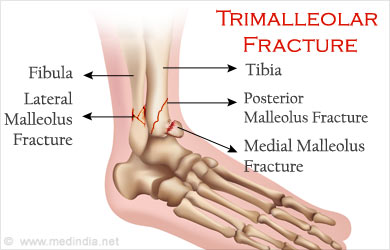
  • comminuted bimalleolar ankle fracture
  • open reduction internal fixation surgery with insertion of metal plate and screw
  • three day hospitalization, casted one month, physical therapy for five weeks (after which plaintiff never had any more medical treatment for this injury)
  • unable to return to work (machine operator) for three months (working as security guard at time of trial)
  • post-traumatic arthritis (that plaintiff’s expert said is progressive, permanent and will likely require future surgery)
  • continuing pain, significant range of motion loss,  antalgic gait (limp) and inability to resume previously very active recreational soccer

Trimalleolar Fracture:

The appellate court judges based their very significant damage award reduction on case precedent. Without discussion, the decision merely mentions four prior cases, each dealing with ankle fractures.

Here are the cases cited in the appellate court decision:

  1. Rivera v. New York City Transit Authority (1st Dept. 2012) – $1,200,000 (reduced from $1,700,000) for 35 year old with trimalleolar fracture, cartilage and tendon damage, three surgeries
  2. Alicea v. City of New York (1st Dept. 2011) – $1,182,000 (increased from $941,000) for 33 year old with bimalleolar fracture, three surgeries.
  3. Hopkins v. New York City Transit Authority. (1st Dept. 2011) - $625,000 affirmed for 22 year old with trimalleolar fracture, two surgeries
  4. Ruiz v. New York City Transit Authority (1st Dept. 2007) – $300,000 (reduced from $1,100,000) for 43 year old with bimalleolar fracture, one surgery

It appears that the appellate court in Micky v. City of New York found that of the four cases cited Ruiz is most analogous – similar age, fractures and same single surgery.

In the two cases (Rivera and Alicea) in which the court allowed more than $1,000,000 in damages, the plaintiffs were more than 10 years younger than Mr. Micky (this affecting the length and size of the future damages award), each had more traumatic trimalleolar fractures (as opposed to Micky’s bimalleolar fracture) and three (as opposed to two) surgeries.

Inside Information:

  • In closing arguments, defense counsel told the jurors that her adversary "may recommend as much as $50,000," an amount plaintiff’s counsel called "preposterous." He suggested $500,000 for past pain and suffering plus $1,750,000 for the future.
  • At a court settlement conference seven months before trial, plaintiff offered to settle for $750,000 but the city made no offer.
  • There was only one medical witness in the case – orthopedic surgeon Jeffrey Kaplan, M.D. testified as an expert for plaintiff. He examined Mr. Micky once, eight years after the accident.
  • Plaintiff’s counsel moved for reargument of the appellate court decision and/or leave to appeal to the state’s highest court, the Court of Appeals. The city has cross-moved, seeking a reversal of the liability determination. The motion and cross-motion have not yet been ruled upon.


Appellate Court Affirms Refusal to Award Future Damages in Knee Injury Case

Posted in Knee Injuries

On July 20, 2007, Patrice Algerio drove her small car through an intersection in Ronkonkama when a box truck driven by an air conditioning firm’s employee drove through a stop sign and collided with her.

Claiming knee injuries, Ms. Algerio sued and fault was assessed 100% against the defendants (the owner and driver of the box truck). A damages only trial was held in Suffolk County in April 2010 resulting in a verdict for pain and suffering in the sum of $50,000 (all past – 3 years).

Plaintiff appealed arguing that the past damages award was inadequate and that the jury was required to award future damages as well.

In Algerio v. Caribbean A.C. (2d Dept. 2012), the appeals court held that the past damages award was inadequate and ordered an increase to $200,000.

As to future damages, though, the appeals court declined to disturb the jury’s finding that plaintiff was entitled to no award at all.

The decision states that it concerns a knee injury; however, there is no discussion of the nature of the injuries.

Here are the injury details:

  • knee pain at the scene requiring ambulance transport to the local hospital where plaintiff was treated and released
  • meniscal tears
  • arthroscopic surgery six weeks later (synovectomy, debridement and menisectomy)
  • total knee replacement surgery on May 13, 2009
  • continuing pain, antalgic gait (limp), inability to walk for more than 15 minutes, need to wear compressant stockings


Plaintiff, 52 years old at the time of the accident, was employed as a drug counselor seeking government assistance for her clients. She was out of work for three months.

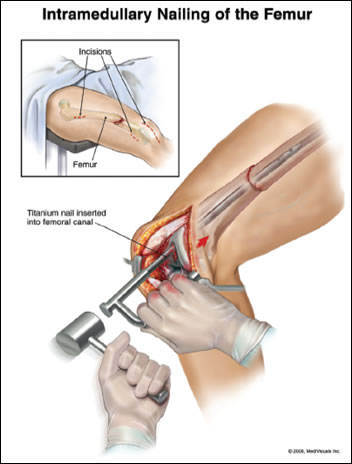
The key to the denial of future damages, both for the jurors and the judges, was the fact that plaintiff had been involved in a very serious car accident in 1975 in which she sustained fractures of her shoulder, elbow and wrist as well as her femur (same leg as the current injury). She required open reduction and internal fixation surgery with an intramedullary rod from her hip to her knee. The rod was surgically removed a year later.

Ms. Algerio claimed she recovered fully from the prior accident after the rod removal and was completely asymptomatic for decades.

The defense argued that the 2007 knee injury was insignificant, focusing on arthritis in the knee joint that was present in an MRI taken within a week of the current accident.

Plaintiff’s treating surgeon, Fred D. Cushner, M.D., admitted that Ms. Algerio had extensive arthritis in her knee before the 2007 accident and that he performed the knee replacement on her "because she had arthritis." Defense counsel called this the "moment of great clarity in the case, the pinnacle of the trial" because, he said, it established that the 2007 accident was not the cause of the knee replacement surgery.

Plaintiff’s attorney emphasized other testimony from Dr. Cushner in which he stated that while the prior injury produced some degeneration, the new accident exacerbated plaintiff’s arthritis and "resulted in her getting the knee replacement surgery …."

There was no doubt but that plaintiff’ could recover only for damages caused by aggravation of her pre-existing condition, not for the condition itself. In other words, as charged by the judge: plaintiff was entitled to recover for the increased pain and disability resulting from the aggravation.

In arguing against an award of future damages, defense counsel, in his summation, suggested that due to her pre-existing arthritis Ms. Algerio would have needed a knee replacement regardless of the current accident. He said that his clients "should not have to continue to pay for things which would have happened anyway." Clearly, the jurors agreed and the appellate judges found that there was enough evidence to support the conclusion that plaintiff was not entitled to any damages for future pain and suffering.

Inside Information:

  • Plaintiff’s attorney asked the jury to award $2,000,000 for pain and suffering damages ($600,000 past plus $1,400,000 future); whereas defense counsel suggested $60,000 (past only).
  • Defense counsel attacked plaintiff’s credibility because she falsely testified that she began taking an anti-depressant medication only after the 2007 accident. In fact she had been taking the drug for years before.
  • Defense counsel questioned whether in fact plaintiff was telling the truth in view of the absence of any corroborating testimony that plaintiff lived an active, pain-free life until the 2007 accident:  " … no one from the company she works for, no neighbors to testify, no friends who witnessed them dancing …."

Appellate Court Rules that Jurors Erred in Finding No Pre-Death Pain and Suffering in Bus Accident

Posted in Wrongful Death

On June 18, 2005, Luisa Sanchez was walking across 163rd Street in the Bronx when the 28 year old woman was struck by a city sanitation truck.

Ms. Sanchez was found by the truck driver lying in the street behind his truck. She was bleeding from her ears, nose and the back of her head and she was uncommunicative. She’d sustained blunt trauma to her head resulting in a subdural hematoma and brain contusions.

Several emergency surgical procedures were performed to try to relieve the intracranial brain pressure but Ms. Sanchez lapsed into a coma from which she never emerged and died from her injuries 10 months later after several bouts of pneumonia and the onset of sepsis (severe infections).

A lawsuit was brought by the decedent’s mother on behalf of Ms. Sanchez’s five year old daughter seeking damages for pre-death pain and suffering, loss of parental guidance and other economic losses.

The city claimed that its driver was not negligent because Sanchez crossed in the middle of the street and there were two posted signs at the site prohibiting pedestrians from crossing.

On February 11, 2010, a jury determined that both parties were negligent (the city driver 30%, Sanchez 70%) and assessed $870,000 in damages (before apportionment) as follows:

  • $245,000 past medical expenses (agreed to by both sides)
  • $150,000 for future lost earnings (13 years)
  • $325,000 for loss of parental guidance (13 years) and
  • $150,000 for loss of household services (13 years)

The trial judge issued a lengthy decision upholding the verdict.

Plaintiff successfully appealed the  refusal to award any pain and suffering damages arguing that there was evidence (from first responders at the scene) that, for at least 10 minutes, Ms. Sanchez was somewhat conscious and experienced pain.

In Sanchez v. City of New York (1st Dept. 2012), the appeals court held that Ms. Sanchez  "showed some signs of consciousness, if not awareness" and experienced "some level of pain and suffering during her interludes of consciousness." This was enough to require an award for pre-death pain and suffering and the judges determined that $400,000  is the minimum acceptable amount under the facts of this case.

The appellate court also addressed additional elements of damages as follows:

  • affirmed the $325,000 loss of parental guidance award (on appeal, plaintiff had argued for an increase to $1,500,000)
  • increased the lost earnings award to include $77,000 for the period before death
  • increased the future loss of household services award from $150,000 to $300,000

Parental guidance damages are meant to compensate a child for the economic loss of a parent’s nurture and care as well as the physical, mental and intellectual training by a parent. Under New York law, damages are not recoverable for a child’s sorrow, mental anguish or loss of parental companionship.

The award for loss of household services, in this case, is intended to compensate Ms. Sanchez’s daughter for the value of her mother’s services (such as laundry, cooking, cleaning and shopping). Plaintiff’s expert economist, Alan Leiken, Ph.D., testified that the value of such services through the daughter’s 21st birthday, would be $345,000.

The total award as modified by the appellate court now stands, before apportionment, at $1,496,000 (an increase of $626,000); however, because of the 70/30 liability split, plaintiff’s actual recovery will be $449,000.

  Inside Information:

  • Plaintiff’s attorney conceded that the decedent was negligent. In his closing argument, counsel stated that the jurors would be correct in assigning 15% of the fault to plaintiff.
  • Defense counsel suggested to the jury that if they found any liability on defendant’s part then $75,000 would be appropriate for pre-death pain and suffering. Plaintiff’s attorney asked for $750,000.
  • Plaintiff asked the jury  for $2,000,000 for loss of parental guidance while defense counsel suggested $150,000.
  • During trial, plaintiff rejected a settlement offer of $500,000.